Quick answer
Decide which partner type you need (importer, agent, trading company, wholesaler or integrator). Choose a show where those companies walk the floor, and book meetings before you fly. Signal at the booth that you are looking for distributors (販売代理店募集). Qualify candidates with set questions, follow up within days, and sign only after checks and legal advice.
Key takeaways
- In Japanese, 代理店 (dairiten) and 販売店 (hanbaiten) are both often translated as "distributor", but they can mean very different arrangements. Define the role in writing.
- Ask the organizer which buyer types attend. The U.S. Commercial Service recommends this before choosing a show.
- Book meetings before the show through organizer meeting systems, business matching and your country's trade agency.
- Expect a slow, team-based decision. Several meetings over a few months are normal.
- Register your trademark in Japan before you share brand plans widely. Japan uses a first-to-file system.
On this page
For many overseas companies, the hardest part of entering Japan is not the product. It is finding the right local partner. Japan's distribution system has more layers than most markets, and wholesalers have more influence than in most other countries. The EU-Japan Centre calls choosing the right distributor the most difficult task, and notes that many European companies have signed with the wrong one.
Trade shows are one of the best places to meet candidates face to face. The U.S. Commercial Service suggests that exhibiting at an international trade show in Japan may be the most effective way to enter the market. Being there in person also shows Japanese partners that you are serious about Japan.
This 7-step plan shows how to use a trade show to find, check and sign a distributor in Japan.
First, know which kind of partner you need
"Distributor" covers several different roles in Japan. Decide which one you need before you go, because it changes which show you choose and who you meet.
| Partner type | Japanese term | What they usually do | Good fit when |
|---|---|---|---|
| Importer / distributor | 販売店 (hanbaiten), 輸入販売 | Buys your product, holds stock and resells it. Often handles import and compliance | Physical products that need local stock and service |
| Sales agent | 代理店 (dairiten) | Represents you and finds customers, sometimes for commission. May not hold stock | Equipment or services with a long sales cycle |
| Trading company | 商社 (shōsha): general (総合商社) or specialized (専門商社) | Imports, finances and moves goods; sells to manufacturers or wholesalers | Materials, ingredients, components and larger volumes |
| Wholesaler | 問屋 (ton'ya), 卸 (oroshi) | Connects makers with many retailers | Food, gifts and consumer goods sold through many small shops |
| System integrator / reseller | SIer, リセラー | Combines and resells technology for end users | Software, IT, robotics and factory equipment |
| Direct sales | — | You sell to customers yourself | Enterprise B2B with a few large customers |
Also remember that you may not need a distributor at all. Direct selling works in many sectors. The right model depends on how products like yours reach buyers in Japan today.
Step 1: Write a partner profile (9–12 months before the show)
Before you choose a show, write down what your ideal partner looks like. This keeps you from signing with the first friendly company you meet.
- Customers: Which customer types and sales channels must they reach?
- Region: All of Japan, or a region such as Kanto (Tokyo) or Kansai (Osaka)?
- Size: How many sales staff? Do they have a branch network?
- Brands they carry: Products that complement yours, not compete with them.
- Import and regulation: Can they handle your product's rules? Depending on the product, this can include food import notifications, electrical safety marks (PSE) or medical device approvals.
- Service: Can they install, repair and support your product in Japanese?
- Language: Is there at least one person who can work with you in English?
Turn this into a simple scorecard. You will use it at the show (step 5).
Step 2: Choose a show where distributors walk the floor (6–12 months before)
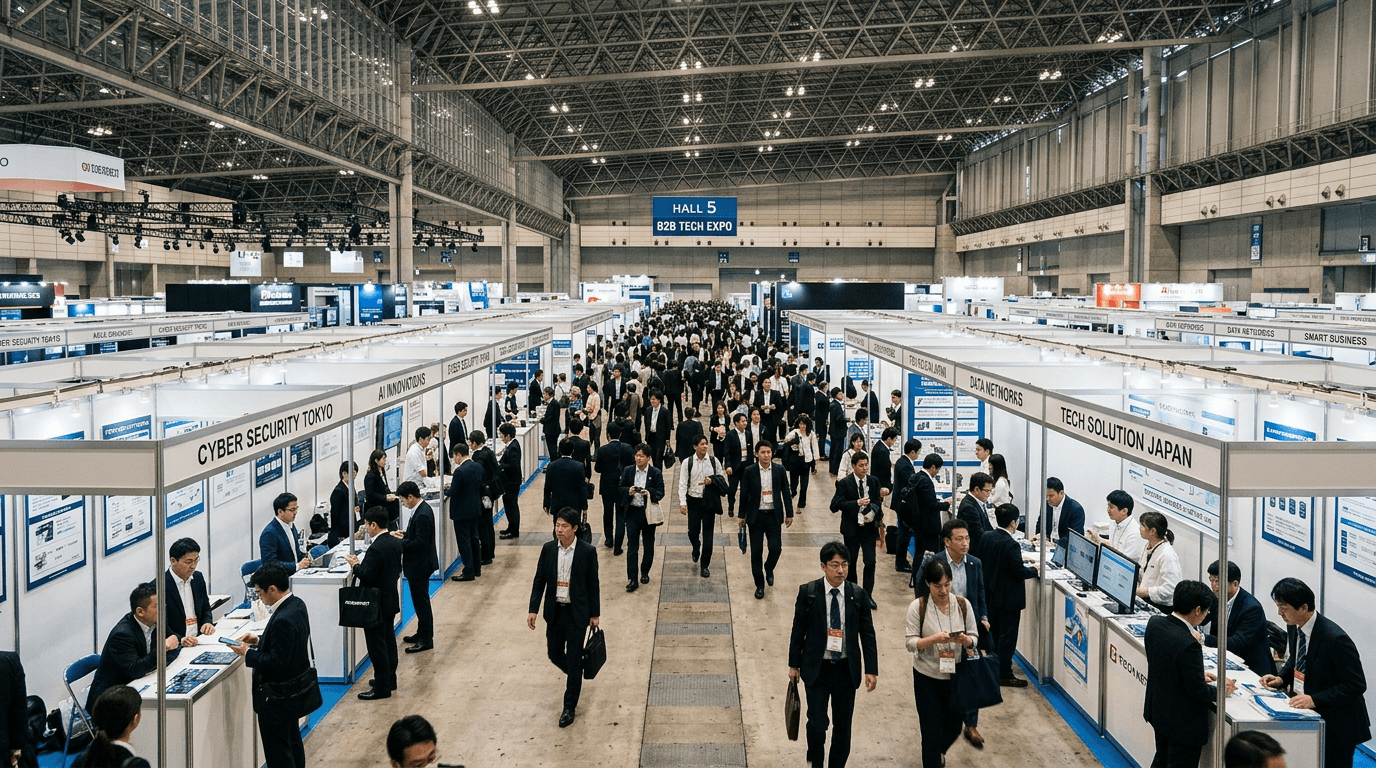
Many visitors at Japanese shows are end users. You need a show where importers, wholesalers and trading companies attend in numbers.
- Choose industry-specific shows. RX Japan, for example, lists retailers, wholesalers, distributors, trading companies and sourcing teams among the buyers at its LIFESTYLE Week. MEDICAL JAPAN promotes itself as a show that brings importers and distributors to meet exhibitors. Japan IT Week highlights meetings with local sales partners.
- Ask the organizer who attends. The U.S. Commercial Service advises companies to contact organizers directly and ask which Japanese buyers plan to attend. Ask for a visitor breakdown by business type and job title.
- Check last year's exhibitor list. Japanese importers often exhibit with the overseas brands they already carry. Companies that import products similar to yours, but not competing with them, are strong candidates.
- Watch the competition. Your competitors' Japanese partners will be at the show too. Note who they work with.
Our list of the biggest trade shows in Japan and the Show Finder can help you build a short list.
Step 3: Book meetings before you fly (2–3 months before)
The best distributor meetings are booked before the show opens. Walk-in visits are a bonus, not a plan.
- Use the organizer's meeting system. At some RX Japan shows, you can send appointment requests through the online exhibitor directory. Suggest specific times so busy buyers can say yes quickly.
- Ask about business matching. Some organizers invite importers and distributors and arrange one-to-one meetings with exhibitors. MEDICAL JAPAN has offered this kind of matching support with importers.
- Use your country's trade agency. Many national trade agencies run matchmaking programs and national pavilions in Japan. See our guide to support for foreign exhibitors.
- Research in Japanese. Many good partners have little English presence online. Use Japanese-language industry directories, trade association member lists and trade media.
- Ask your target retailers. A simple question — "Which distributor do you buy from?" — tells you who already reaches your customers.
Send each candidate a short introduction email in Japanese and English, with a one-page Japanese company profile attached.
Step 4: Set up your booth to attract partners (show week)
A booth that sells to end users is not the same as a booth that recruits distributors. Tell visitors clearly that you are looking for partners.
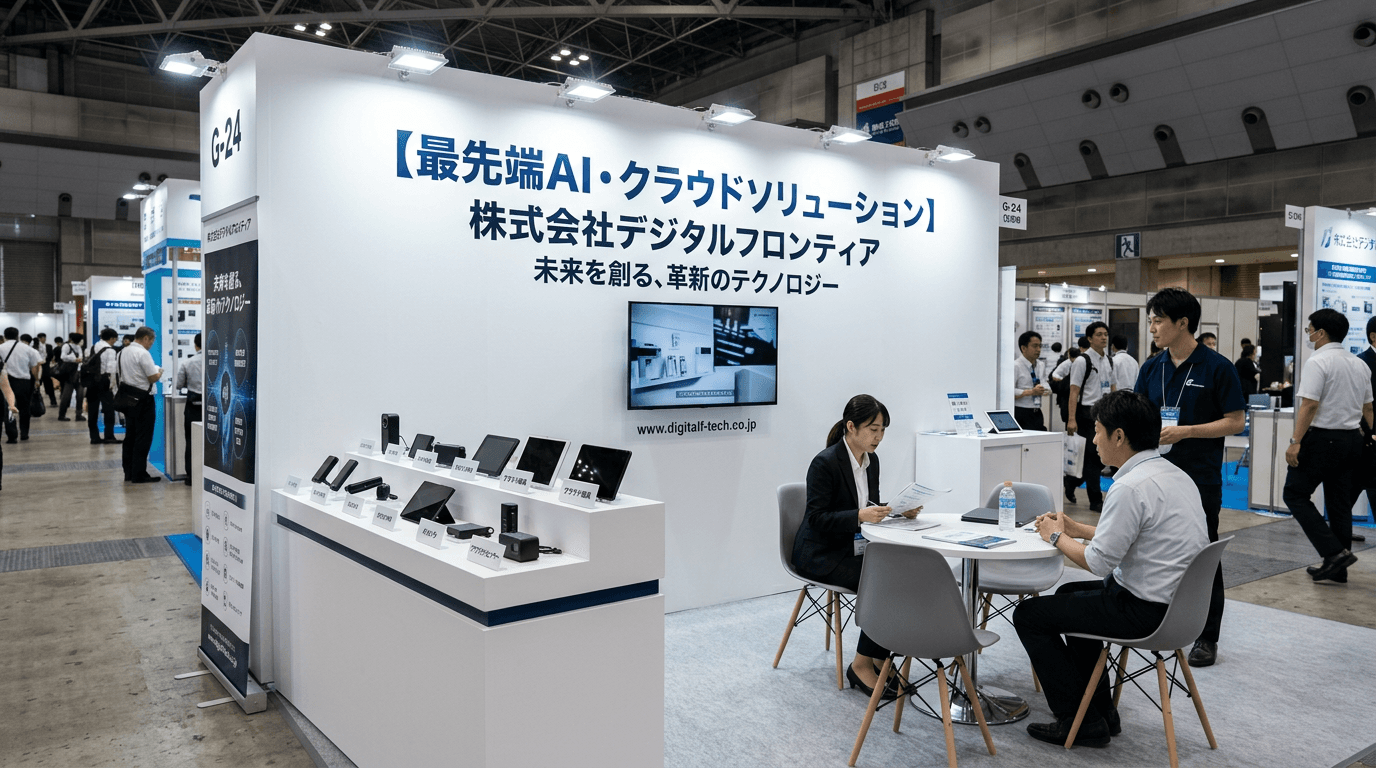
- Use a Japanese sign. A line such as 「販売代理店募集」 (hanbai dairiten boshū, "distributors wanted") is common at Japanese shows. Add the regions or channels you are looking for.
- Have partner terms ready. Prepare an export price list (with your Incoterms, such as FOB or CIF), minimum order quantities, lead times, the margin a distributor can expect, and your marketing support. In Japan the distributor usually sets the retail price, so show the price structure they will work with.
- Prepare a partner pack in Japanese. Include a catalog, specifications, certificates, a one-page Japanese summary and bilingual business cards in Japan (opens in a new tab) for everyone on your team.
- Bring a decision maker. Japanese partners want to meet someone who can make commitments, especially at your first show in Japan.
- Plan for language. If no one on your team speaks Japanese, book an interpreter for the meeting table. You can ask us for help through the Get Help form.
Our article on trade show booth design in Japan covers the booth itself, including the seated meeting space that Japanese business talks need.
Step 5: Qualify candidates at the show
You may meet 20 interested companies in three days. Use the same questions with each one, and score them against your partner profile the same evening.
| Question to ask | What a good answer looks like |
|---|---|
| Who are your main customers? | Named customer types and channels that match yours |
| Which regions do you cover? | A clear area, with branches or partners there |
| Which overseas brands do you already carry? | Complementary brands they can name, and how long they have worked with them |
| Do you carry any competing products? | No, or a clear explanation of how they would manage it |
| How many sales staff would work on our product? | A named person or team, not "everyone" |
| Do you handle import and regulatory work? | Experience with your product category |
| How would you launch our product in the first year? | Concrete ideas: target customers, events, pricing |
| Can you provide service and support in Japan? | In-house staff or a named service partner |
| What do you expect from us? | Clear requests on samples, training, marketing and terms |
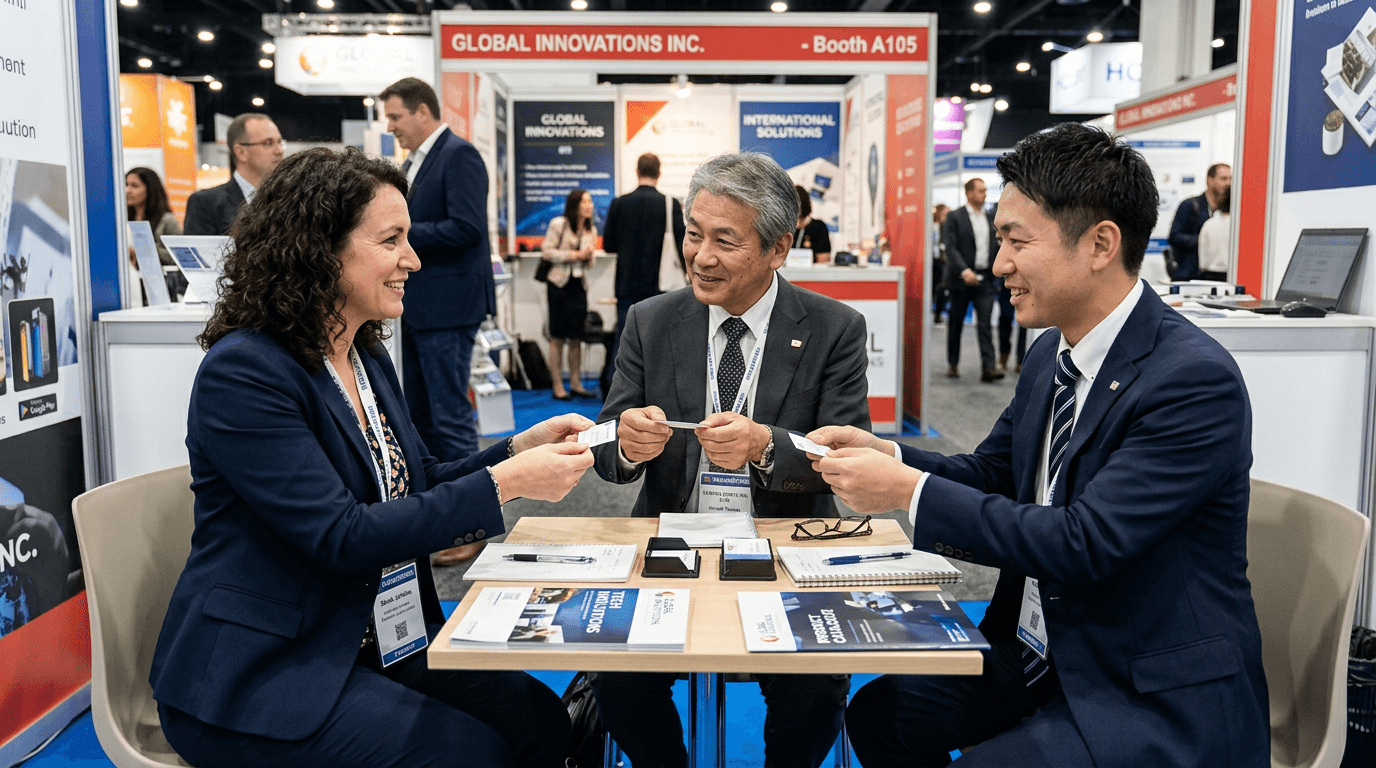
Exchange business cards (名刺, meishi) properly. Do not write notes on a person's card in front of them. Record your notes in your phone or lead app right after the meeting. Our meishi etiquette guide explains the details.
At the end of each day, rank your contacts A (strong fit, follow up first), B (possible) or C (not a fit).
Step 6: Follow up the Japanese way (2 weeks to 6 months after)
- Send a thank-you email within two or three business days. Write in Japanese and English, and attach everything you promised at the booth.
- Expect a slow, team-based decision. In many Japanese companies, proposals pass through several managers for approval, a process often called 稟議 (ringi). Silence for a few weeks does not mean no.
- Visit their office. A visit to the candidate's office or warehouse tells you a lot, and it shows commitment.
- Check the company. Japanese credit research firms such as Teikoku Databank (帝国データバンク) and Tokyo Shoko Research (東京商工リサーチ) sell company reports.
- Start with a trial. A first order or a test period lets both sides learn before a long-term agreement.
Our guide to following up Japanese trade show leads covers emails, timing and tone.
Step 7: Agree the terms carefully
A distributor agreement in Japan can last for many years, so take time with it.
- Exclusivity. Many Japanese distributors ask for exclusive rights because they invest in building your brand. If you agree, limit it by territory, channel or product, and link it to minimum purchase targets with a review date.
- Term and termination. Agree the length, the review points and how either side can end the agreement. Ending a long-term distribution relationship can be difficult, so get advice from a lawyer qualified in Japan before you sign.
- Trademark. Japan uses a first-to-file system. Register your trademark in Japan in your own company's name before you share your plans widely. Never let a distributor register it in their name.
- Pricing. The distributor usually sets the retail price. Competition law in Japan, as in many countries, generally does not allow a supplier to force a resale price, so agree recommended prices and margins instead.
- Language. Use a bilingual contract and state which language version applies if the two differ.
- Support. Write down what you will provide: samples, training, Japanese marketing materials, technical support and visits.
Red flags to watch for
- They want exclusive rights for all of Japan, with no sales targets.
- They cannot name current customers or the brands they carry.
- They offer to register your trademark for you.
- They have no experience with products like yours.
- Only one person knows about your product, and there is no team behind them.
- They push you to sign at the show.
Your 12-month timeline
| When | What to do |
|---|---|
| 12 months before | Write the partner profile; choose candidate shows |
| 9 months before | Book your booth; start Japanese materials |
| 6 months before | Register your trademark in Japan if you have not already |
| 3 months before | Research candidates; send introduction emails; book meetings |
| 1 month before | Finalize the partner pack, price list and printed materials |
| Show week | Meet, qualify and rank candidates every evening |
| 1–2 weeks after | Thank-you emails; send promised information |
| 1–3 months after | Office visits; company checks; trial order |
| 3–6 months after | Negotiate and sign, with legal advice |
Next steps
- Choose your show: The biggest trade shows in Japan
- Plan every deadline: Deadline Planner
- Need an interpreter or local support? Tell us what you need.
Frequently asked questions
Do I need a distributor to sell in Japan?
Not always. Direct selling works in many sectors, especially enterprise B2B with a few large customers. You usually need a local partner when your product needs import handling, Japanese regulatory approval, local stock or after-sales service, or when you sell to many small retailers through wholesalers.
What is the difference between a dairiten and a hanbaiten?
Both words are often translated as "distributor". A hanbaiten (販売店) usually buys your product and resells it at its own risk. A dairiten (代理店) often acts on your behalf, sometimes for a commission, and may not hold stock. Japanese companies use both words loosely, so write the exact role, territory and responsibilities into the contract.
Which trade shows in Japan are best for finding a distributor?
Industry-specific shows where importers, wholesalers and trading companies attend as visitors. Examples are FOODEX JAPAN for food and drink, the Tokyo International Gift Show for consumer goods, MEDICAL JAPAN for medical products and Japan IT Week for software. Ask each organizer for a visitor breakdown by business type before you book.
Should I give a Japanese distributor exclusive rights?
Many Japanese distributors ask for exclusivity, because they invest time in building your brand. If you agree, limit it by territory, sales channel or product line, link it to minimum purchase targets and review it after a fixed period. Get advice from a lawyer qualified in Japan before you sign.
How long does it take to sign a distributor in Japan?
Often several months after the show. Japanese companies usually decide as a team, and proposals may need approval from several managers. Expect follow-up meetings, a visit to their office and possibly a trial order before a full agreement.
Do I need to register my trademark in Japan first?
It is a strong precaution. Japan uses a first-to-file system, so the first applicant usually gets the right. Register your brand in your own company's name before you share plans widely, and never let a distributor register it for you in their name. A Japanese patent attorney (benrishi) can handle the filing.
Sources
- International Trade Administration — Japan Country Commercial Guide: selling factors and techniques
- Codigital — Distributor and partner search in Japan
- EU-Japan Centre — Brief guide to distribution systems in Japan (PDF)
- RX Japan — LIFESTYLE Week: exhibit information
- RX Japan — MEDICAL JAPAN
- JETRO — MEDICAL JAPAN exhibitor briefing (one-to-one matching with importers)
- RX Japan (Highly-functional Material Week) — Tips for exhibiting
- Japan IT Week — Spring show
- Alberta Agriculture — Brokers and distributors: your partner in the market (PDF)
Shows mentioned
- 9–12 March 2027Food & Beverage
FOODEX JAPAN 2027
Tokyo Big Sight, Tokyo
Exhibitors3,238Visitors73,842Overseas exh.2,126 - 17–19 February 2027Food & BeverageRetail & Store Design
SUPERMARKET TRADE SHOW 2027
スーパーマーケット・トレードショー
Makuhari Messe, Chiba
ExhibitorsTBCVisitors81,000Overseas exh.TBC - 17–19 February 2027Electronics & SemiconductorsManufacturing & Machinery
NEPCON JAPAN 2027
Tokyo Big Sight, Tokyo
ExhibitorsTBCVisitorsTBCOverseas exh.TBC